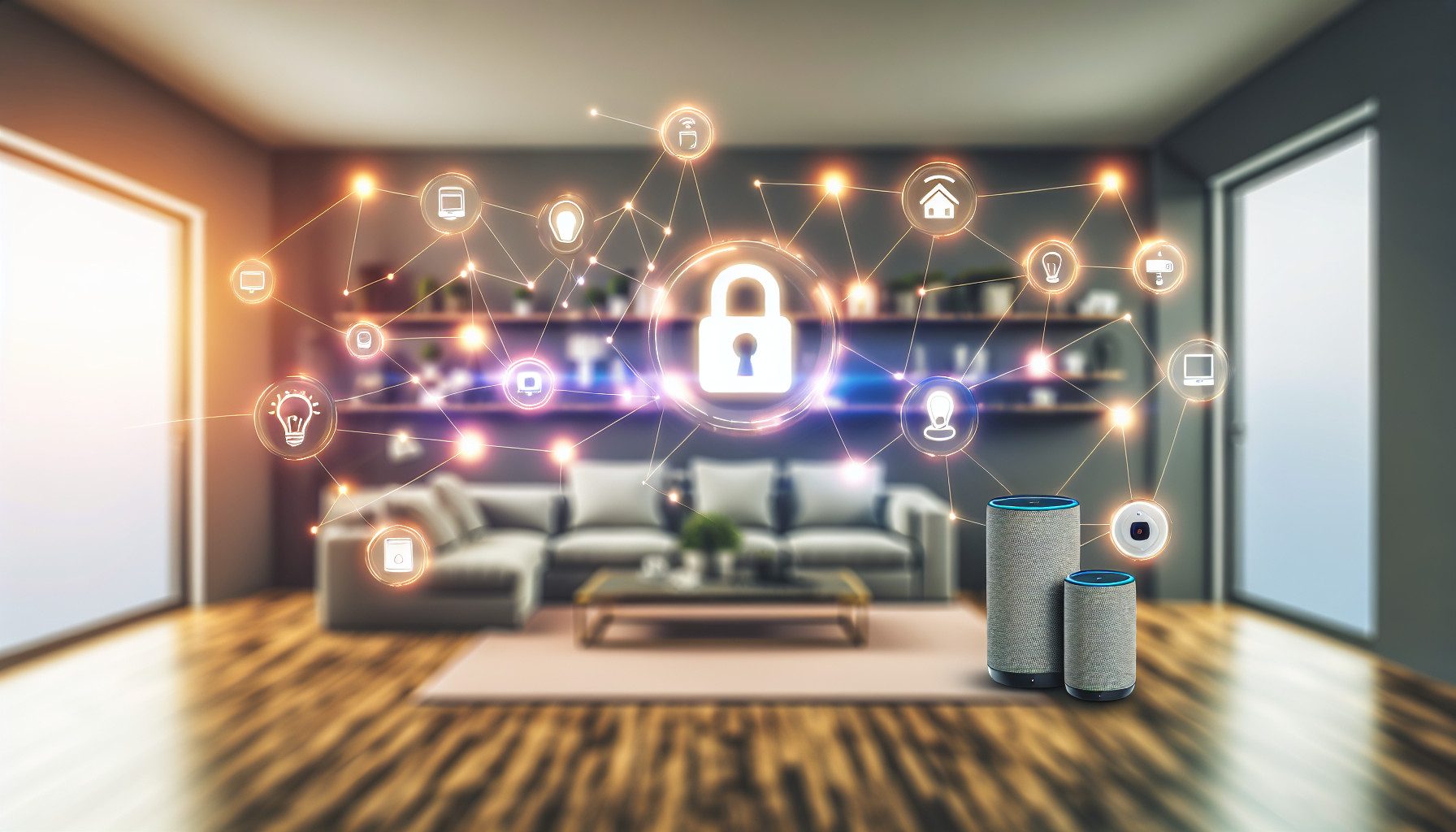
The attack surface of a smart home encompasses all the possible points where an unauthorized user might gain access to the system and extract data or compromise its functionality. Understanding this surface is crucial for building a resilient connected living space. It includes not only the physical devices themselves but also the communication protocols they use, the cloud services they rely on, and the ways these components interact.
Smart home devices, due to their increasing complexity and connectivity, present a diverse and expanding attack surface. These devices can be broadly categorized as follows:
- Entertainment Systems: Smart TVs, streaming devices, and smart speakers often collect user data and can be vulnerable to hijacking.
- Security Systems: IP cameras, smart locks, and alarm systems are prime targets for attackers seeking to monitor or control access to a home.
- Appliances: Smart refrigerators, washing machines, and ovens, while seemingly innocuous, can be exploited to gain a foothold in the network.
- Lighting and Climate Control: Smart bulbs, thermostats, and smart plugs can be manipulated to cause disruptions or gather data on occupancy patterns.
- Hubs and Controllers: Devices like Amazon Echo, Google Home, or dedicated smart home hubs act as central points of control and represent a high-value target.
These devices communicate using various wireless protocols, each with its own security implications:
- Wi-Fi: The most common protocol for internet connectivity, Wi-Fi networks secured with weak passwords or outdated encryption (like WEP) are easily compromised. Man-in-the-middle attacks are a significant threat on unsecured or poorly secured Wi-Fi networks.
- Zigbee: A low-power protocol often used for lighting and sensors; vulnerabilities in Zigbee implementations can allow attackers to control devices or inject malicious code.
- Z-Wave: Another low-power protocol popular for home automation; similar to Zigbee, security flaws can lead to unauthorized device control and data theft.
- Thread: An IPv6-based protocol designed for IoT devices, offering improved security features compared to Zigbee and Z-Wave, but still susceptible to implementation errors.
Cloud services are integral to the operation of many smart home devices, providing remote access, data storage, and firmware updates. However, reliance on the cloud introduces new risks:
- Data breaches: Cloud providers can be targeted by attackers seeking to access user data stored on their servers.
- Service outages: Disruptions to cloud services can render smart home devices unusable.
- Account hijacking: Compromised user accounts can allow attackers to control devices remotely and access personal information.
Device integration and interoperability, while enhancing user convenience, can also expand the attack surface. When multiple devices from different manufacturers are connected, vulnerabilities in one device can potentially be exploited to compromise the entire system.
Third-party apps, designed to control and manage smart home devices, can also serve as entry points for attackers. Malicious or poorly secured apps can be used to steal credentials, inject malware, or gain unauthorized access to devices. It is also important to consider permissions granted to third-party applications, as excessive permissions can open the door to data harvesting and privacy violations.
Firmware updates are essential for patching security vulnerabilities and improving device functionality. However, the update process itself can be exploited by attackers. Unsecured firmware updates can be intercepted and replaced with malicious code, allowing attackers to gain persistent access to devices. Devices that lack proper update mechanisms remain vulnerable to known exploits, effectively becoming digital sitting ducks. It’s vital that devices support secure, authenticated firmware updates.
How to Reduce Your Smart Home’s Attack Surface
Understanding the risks is half the battle — here are the practical steps we recommend (and implement) for every installation:
- Segment your network: Put IoT devices on a separate Wi-Fi network or VLAN so a compromised smart plug can’t reach your laptop or phone.
- Use strong, unique credentials: Change every default password, enable two-factor authentication on cloud accounts, and use WPA3 (or at minimum WPA2) on your router.
- Keep firmware updated: Enable automatic updates where available, and replace devices a manufacturer no longer supports.
- Prefer local control: Hubs that process automations locally — such as Home Assistant — reduce your dependence on cloud services and keep data inside your home.
- Audit third-party apps: Remove integrations you no longer use and review the permissions you’ve granted.
Conclusion
Every connected device — from a smart bulb to a security camera — adds a potential entry point to your home network. The goal isn’t to avoid smart home technology, but to deploy it deliberately: segmented networks, updated firmware, strong authentication, and local-first control go a long way toward a resilient connected home.
Related reading: Overview of Smart Home Security · Smart Home Ecosystems and Threat Models · Smart Security Camera Installation
Want a professionally secured smart home in NJ, NY, PA or CT? Contact MySmartHomes for a free consultation.
Book your free consultation
Tell us what you want to automate. We reply within one business day with a recommendation and a price range — no obligation.
- Phone201-815-8673
- Emailinfo@mysmarthomes.us
- HoursMon – Fri, 9:00 am – 6:00 pm EST
- WhereWayne, NJ 07470